
Science-Based Nutrition Principles for Sustainable Health
Stop the All-or-Nothing Cycle – Here’s What Actually Works
The all-or-nothing cycle when it comes to your diet doesn’t work, no matter how it’s dressed up. Keto, vegan, paleo, high-carb low fat, low-carb high fat, sugar-free, fat-free, clean eating… These diets all follow the same pattern: strict rules, quick “wins”, followed by exhaustion, cravings and burnout. Many women stay stuck in that loop for years. They keep trying the next thing that promises to help them finally lose fat, feel better and look good. And they keep falling short, again and again.
The good news is there is a better way. A calmer, more grounded approach that delivers steady energy, a stable mood, clearer skin, better digestion and lasting confidence – without extremes.
These seven nutrition principles are the foundation of that approach. They replace punishment with nourishment and confusion with clarity. They are simple, evidence-based and designed to work in real life for busy women, mothers, professionals and anyone who wants sustainable health without constantly starting over.
Start applying them (even loosely!) and you will begin to feel the difference within days.
These are the exact principles that form The Hot & Healthy Method way of eating. They are simple, evidence-backed and designed to help you feel energised, balanced and confident for life. Apply them and you will transform your health.
1. Eat Real, Whole, Nutrient-Dense Foods: The Foundation of Sustainable Nutrition
Forget the myth that healthy eating has to be complicated or expensive. Choose real food and whole food most of the time and your body responds immediately.
Ultra-processed foods (UPF), fried foods, processed meats and packaged snacks drive inflammation, poor energy and higher risk of obesity, diabetes and heart disease. Real, minimally processed food delivers fibre, micronutrients, polyphenols and compounds that support your mitochondria, reduce inflammation and promote anti-inflammatory benefits. Patterns like Blue Zones and Mediterranean eating prove this daily: extra virgin olive oil, colourful plants, legumes, nuts and whole grains deliver longevity, better quality of life and lower chronic disease risk.
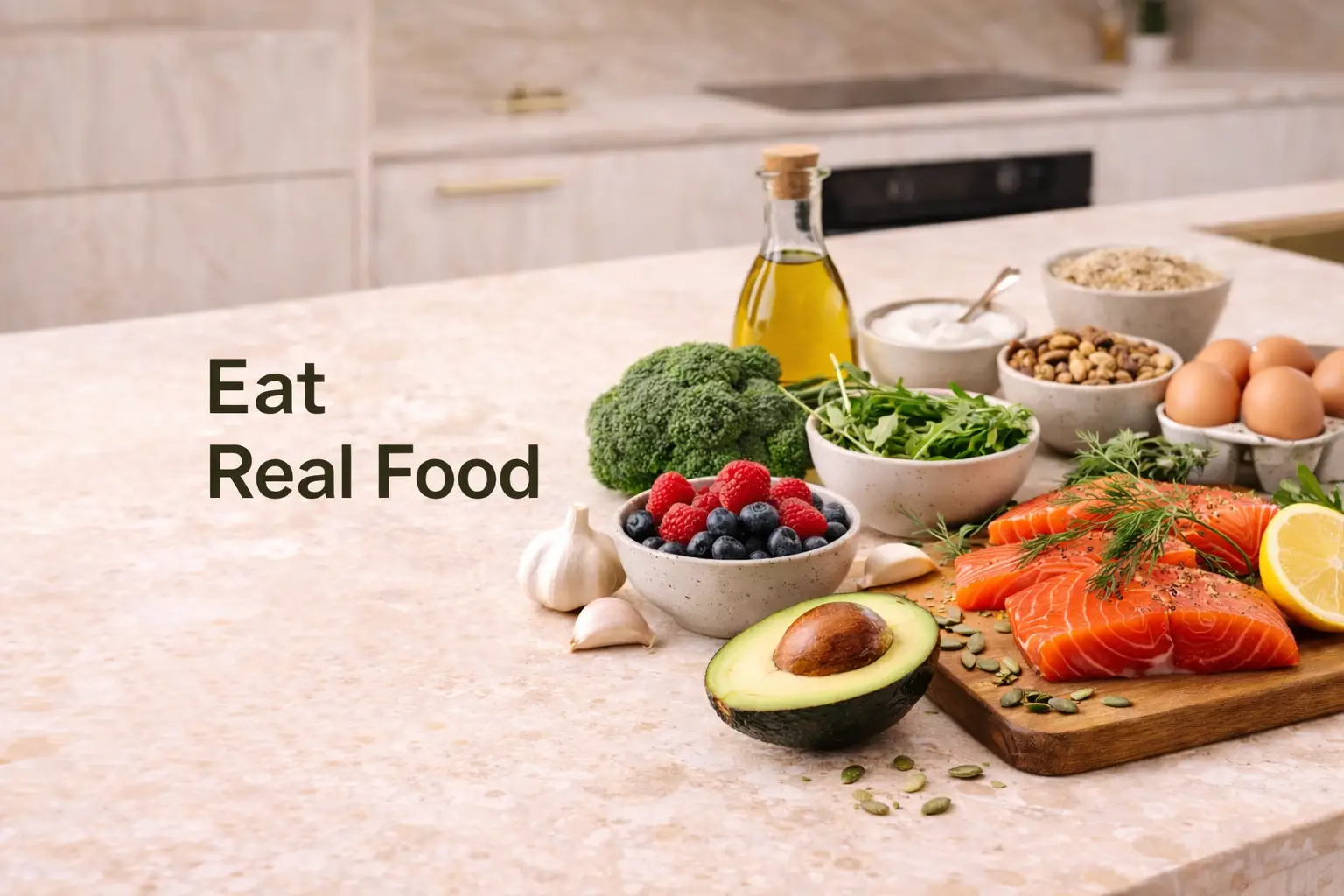
Start today: Build every plate around recognisable, real food ingredients – eggs, salmon, berries, oats, avocado, leafy greens and olive oil. Replace just one processed item this week with something you prepare yourself. Eating real food is incredibly powerful. You will feel the difference fast.
2. Master Energy Balance & Calorie Awareness Without Obsession
Stop treating calories like a punishment scorecard. Understand energy balance and calorie awareness instead and watch your body thrive.Physics still applies: energy balance matters. Yet quality and context matter more. Higher protein intake increases satiety, preserves muscle mass during fat loss or weight management, and protects your metabolism. Under-eating lowers energy availability and harms long-term results. Gentle awareness (noticing how food makes you feel) gives sustainable fat loss, weight management and steady energy without the rebound.
Start today: Choose meals that leave you satisfied and energised for hours. If energy dips or progress stalls, add quality calories rather than cut more. This simple shift ends the obsession and delivers real results.
3. Balance All Macronutrients & Maximise Micronutrients for Optimal Health
Carbohydrates are not the enemy. Protein is not the only hero. You need all three macronutrients working together — and plenty of micronutrients — for true health.
Protein delivers satiety, muscle retention and hormonal balance (including fertility support). Carbohydrates provide steady fuel and blood sugar balance. Healthy fats and fibre keep digestion smooth and mitochondria firing. Maximising micronutrients through variety prevents the hidden deficiencies that cause fatigue and cravings. Balanced eating consistently outperforms restrictive diets (keto, paleo, low-carb, sugar-free, animal-based) for long-term metabolic health.
Start today: Use the simple balanced plate: palm of protein (eggs, fish, chicken or legumes), fist of carbohydrates (rice, oats or potato), thumb of healthy fats (olive oil or avocado) and a big pile of fibre-rich vegetables. Add one nutrient-dense snack like Greek yoghurt with berries. You will feel satisfied and strong all day.
4. Cook More at Home + Adopt Realistic 80/20 Moderation for Long-Term Success
Home-cooked meals give you back control and joy. Pair them with realistic 80/20 moderation and you create habits that actually last.
Cooking at home reduces ultra-processed foods, additives and the carcinogenic risks linked to some processed meats. The 80/20 rule — 80 % whole-food, home-prepared eating and 20 % flexibility — dramatically improves adherence and prevents burnout. Science confirms flexible moderation beats rigid perfection for sustainable weight management and habit formation.
Start today: Prepare most meals yourself this week. Allow 5–7 relaxed moments (restaurant brunch, dark chocolate, wine with friends). This keeps life enjoyable while protecting your blood sugar balance and energy levels.
5. Food as Medicine: Preventative Nutrition for Hormones, Gut, Mental Health & Metabolic Longevity
Food is medicine when you use it intentionally. Choose this approach and you actively support hormones, gut health, mood and long-term vitality.
Mediterranean-style patterns reduce depressive symptoms through anti-inflammatory effects and better gut microbiome support. Higher fibre and plant diversity improve bowel movements, lower inflammation and cut risk of prediabetes, diabetes, metabolic diseases, heart disease and obesity. While medications such as Ozempic or Retatrutide help some with appetite, sustainable food habits remain the true foundation for metabolic health, longevity and anti-aging.
Start today: Build a daily “food as medicine” plate with olive oil, colourful plants and fermented foods. Within two weeks you will notice steadier mood, deeper sleep, clearer skin and smoother digestion. This is how you reverse medical conditions and transform your life.
6. Personalised Nutrition: Adapt, Listen to Your Body & Stay Flexible
What worked five years ago may not fit today. Personalised nutrition that evolves with you is the most powerful approach.
Tailoring choices to your current life, energy and preferences consistently outperforms generic plans. Listen to your body for hunger, digestion and mood cues. Gentle structure (regular meal times, balanced timing) plus flexibility supports hormonal balance, fertility and steady energy far better than rigid rules.
Start today: Check in once a week: How is my energy? Digestion? Mood? Adjust with one smart food swap. Use nutrition labels as helpful information, never as a dictator. This keeps nutrition kind, effective and truly yours.
7. Mindful Stewardship & Consistency: Nourish Without Extremes or Orthorexia
Nourish not punish. Consistency beats perfection every single time.
Mindful eating and gentle stewardship create habits your body trusts. Orthorexia appears as obsessive label-checking, anxiety around “bad” foods, social withdrawal and fear-driven restriction — very different from healthy, flexible eating. Community, ritual and breaking bread with others protect mental health and lift mood. Long-term health thrives when you choose nourishment over punishment.
Start today: Eat until you feel 80 % full and genuinely satisfied. Share a home-cooked meal with others this week. When guilt or body-image thoughts appear, pause and ask: “Does this choice nourish me?” This single question builds powerful adherence and lasting freedom.
These principles are not another diet. They are a compassionate, science-led way to relate to food and your body with respect and power.
Choose real food. Make informed choices. Prioritise hydration, quality sleep and lifestyle synergy. You now have everything you need to improve metabolic health, support longevity and enjoy true quality of life.
Pick one principle that speaks to you right now and apply it this week. Small, consistent steps create profound transformation.
Most women benefit from around 1.6–2.2g of protein per kg of bodyweight to support fat loss, muscle and overall health. This also helps keep you fuller for longer.
This is a long-term approach. It focuses on sustainable habits, not restriction or short-term results.
Yes. Carbohydrates support energy, training and hormones. The key is quality and total intake, not cutting them out.
Most women notice better energy, digestion and appetite within 2-4 weeks when they stay consistent.
Yes. Real, whole foods, enough fibre and balanced meals support hormones, gut health and stable blood sugar. This helps improve energy, digestion and long-term metabolic health.
Focus on consistency over perfection. Eat mostly whole foods, allow flexibility, and aim to feel nourished – not controlled. Healthy eating should support your life, not take it over.
No. But you do need awareness of portions and food choices. Understanding calories, macros and how food is structured helps you make better decisions without relying on tracking. Focus on real food, protein and consistency that drives sustainable results.
It means choosing real, whole foods to reduce inflammation, support gut health, balance hormones and stabilise blood sugar. Over time, this improves energy, mood and long-term health.
Start with one simple change: eat more real, whole foods and build your meals around protein. Stick to it for a week before adding anything else. Small, consistent changes lead to real results.
They are simple, evidence-backed habits built on real whole foods, balanced nutrition and consistency. Science-based nutrition principles are designed to support long-term health without extremes.
References:
Lane MM et al. Ultra-processed food exposure and adverse health outcomes: umbrella review. BMJ 2024;384:e077310.
Kokura Y et al. Enhanced protein intake on maintaining muscle mass… Clin Nutr ESPEN 2024.
Bizzozero-Peroni B et al. The impact of the Mediterranean diet on alleviating depressive symptoms. Nutr Rev 2025.
Martinsen T et al. Key evidence for personalised nutrition: a review of randomised controlled trials. Food Funct 2026.